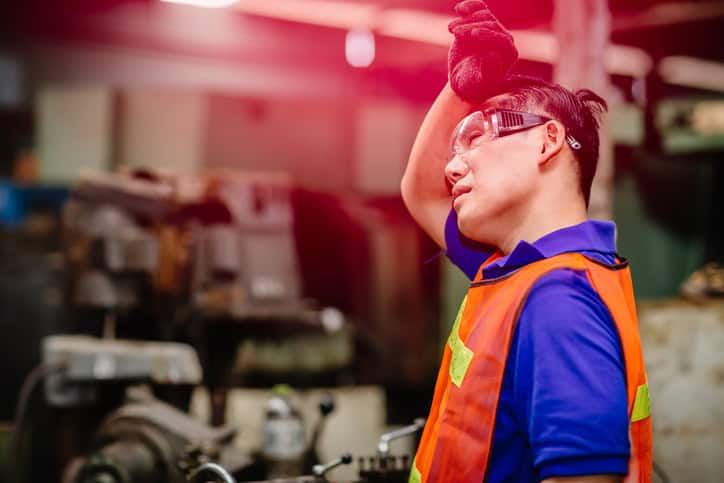
 Heat stress in the workplace is a serious occupational hazard affecting millions of workers each year. While often associated with outdoor jobs, indoor heat exposure can be just as dangerous—especially in industries where equipment, poor ventilation and humidity create extreme conditions.
Heat stress occurs when the body cannot effectively cool itself, causing internal temperatures to rise. This can lead to serious health conditions such as:
- Heat stroke
- Heat exhaustion
- Rhabdomyolysis
- Heat syncope (fainting)
- Heat cramps and rashes
Industries most at risk include manufacturing, warehousing, commercial kitchens, laundries, dry-cleaning operations and greenhouses, where heat sources and limited airflow drive temperatures higher.
With OSHA continuing to enforce heat safety under the National Emphasis Program (extended through April 2031) and state-specific regulations expanding, employers must take proactive steps to reduce risk and maintain compliance.
The good news: heat-related illnesses are largely preventable with the right strategies. Below are seven proven best practices to manage heat stress in indoor work environments.
- Implement a Heat Illness Prevention Program
A formal heat stress prevention program is the foundation of workplace safety.
A well-designed program should:
- Be tailored to your facility’s conditions and operations
- Define clear procedures for heat-related risks
- Include employee training and communication
Key benefits include:
- Reduced injuries and workers’ compensation claims
- Lower absenteeism and turnover rates
- Improved productivity and morale
Train employees during onboarding and reinforce awareness annually—ideally before warmer months begin.
- Monitor and Track Workplace Temperature
Consistent temperature and heat index monitoring is critical for preventing heat-related incidents.
Best practices include:
- Placing thermometers in high-heat areas
- Using Wi-Fi-enabled devices for real-time monitoring
- Measuring the heat index (temperature + humidity) for accuracy
Establish clear thresholds that trigger:
- Work-rest cycles
- Job rotation
- Temporary work stoppages
Data-driven decisions help protect employees before conditions become dangerous.
- Establish Work-Rest Cycles
Work-rest cycles help reduce heat exposure and prevent fatigue.
These should be based on:
- Heat index levels
- Work intensity (light, moderate or heavy labor)
If structured breaks aren’t feasible, job rotation can reduce prolonged exposure to high-heat areas or physically demanding tasks.
Following NIOSH guidelines can provide a practical starting point for implementation.
- Provide Accessible Hydration Stations
Proper hydration is essential in preventing heat-related illness.
Employers should:
- Provide easily accessible water stations
- Offer electrolyte replenishment options (sports drinks or packets)
- Ensure availability throughout all work areas
Even mild dehydration can lead to:
- Reduced concentration
- Increased accident risk
- Decreased productivity
Supervisors should actively encourage hydration by incorporating reminders into daily routines and safety meetings.
- Use Cooling Personal Protective Equipment (PPE)
Cooling PPE helps regulate body temperature and improve worker comfort in hot environments.
Common options include:
- Cooling towels and bandanas
- Moisture-wicking clothing
- Ice or gel cooling vests
- Cooling arm sleeves
Selecting the right PPE depends on:
- Workplace temperature levels
- Physical demands of the job
Proper PPE can significantly reduce strain and improve performance.
- Provide Climate-Controlled Break Areas
Access to air-conditioned or cooled rest areas is essential for recovery.
Effective break areas should:
- Be located close to work zones
- Be available during every break cycle
- Provide a noticeable drop in temperature
These spaces allow workers to:
- Lower core body temperature
- Reduce cumulative heat exposure
- Return to work safely and efficiently
- Develop an Acclimatization Program
Heat acclimatization helps workers gradually adjust to hot environments.
This is especially important for:
- New employees
- Workers returning from time off
Without acclimatization, employees face a higher risk of heat illness.
A structured approach should:
- Gradually increase heat exposure over several days
- Follow guidance from CDC and NIOSH
- Be monitored by supervisors
Even experienced workers can lose heat tolerance after a short absence, making re-acclimation critical.
Why Managing Indoor Heat Stress Matters
Failing to address indoor heat hazards can lead to:
- Workplace injuries and illnesses
- OSHA violations and penalties
- Higher insurance and compensation costs
- Reduced productivity and employee morale
On the other hand, proactive heat management improves worker safety, compliance and operational efficiency.
Take Action: Build a Safer Work Environment
Managing heat stress in indoor workplaces requires a proactive and structured approach. By implementing these seven best practices, organizations can:
- Prevent heat-related illnesses
- Protect their workforce
- Maintain compliance with OSHA regulations
- Improve overall productivity
Start by evaluating your current safety measures and identifying gaps. Even small improvements can make a significant difference in protecting employees from heat-related risks.