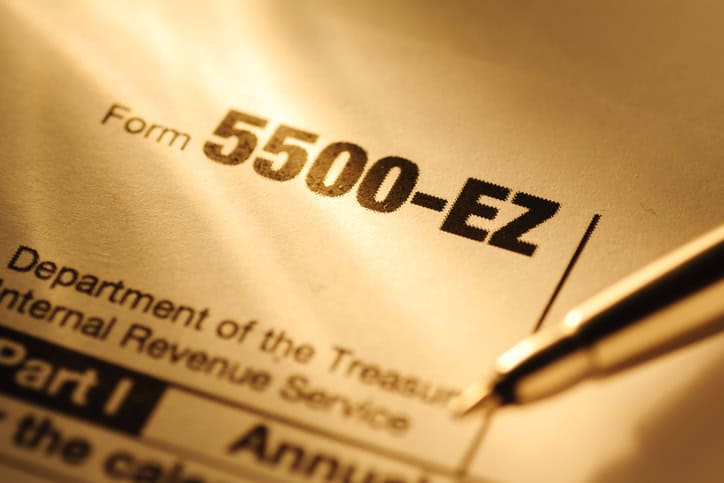
 Each year, many employers are required to file Form 5500, an annual report mandated by the Employee Retirement Income Security Act of 1974 (ERISA). This filing provides critical information about employee benefit plans to the U.S. Department of Labor (DOL) and the Internal Revenue Service (IRS).
If your organization sponsors an employee benefit plan, understanding the Form 5500 deadline, exemptions, and potential penalties is essential to remaining compliant and avoiding costly fines.
When Is the Form 5500 Due?
For employers with calendar-year employee benefit plans, the Form 5500 filing deadline for the 2024 plan year is July 31, 2026. The form must be filed electronically with the DOL using the EFAST2 filing system.
Need More Time?
Employers may request a 2.5-month extension, moving the deadline to October 15, 2026, by filing Form 5558 with the IRS on or before July 31, 2026. Form 5558 can be filed electronically through EFAST2 or submitted in paper form to the IRS.
Who Is Exempt From Filing Form 5500?
Not all benefit plans are required to file Form 5500. In particular, small welfare benefit plans are generally exempt if they:
- Cover fewer than 100 participants
- Are fully insured, unfunded, or a combination of both
Employers should confirm exemption status carefully, as filing requirements vary by plan type and structure.
Late Filings and the Delinquent Filer Voluntary Compliance Program (DFVCP)
The DOL created the Delinquent Filer Voluntary Compliance Program (DFVCP) to encourage employers to voluntarily correct missed or late Form 5500 filings.
Under the DFVCP, eligible plan administrators can:
- File overdue Forms 5500
- Pay reduced penalties
- Avoid significantly higher enforcement fines
To qualify, employers must submit delinquent filings before receiving written notice from the DOL regarding the failure to file.
Penalties for Missing the Form 5500 Deadline
Failure to file Form 5500—or submitting an incomplete or late filing—can result in substantial penalties. Under ERISA, the DOL has authority to assess fines of up to $2,739 per day for each day a plan administrator fails to comply.
In certain cases, penalties may be waived if the noncompliance was due to reasonable cause. Employers that use the DFVCP may also reduce or avoid higher penalty assessments.
Action Steps for Employers
To stay compliant with Form 5500 filing requirements, employers should:
- Confirm whether their employee benefit plans require Form 5500 filing
- Coordinate with brokers, TPAs, or other service providers to prepare required schedules and attachments
- File electronically through the EFAST2 system by July 31, 2026
- Submit Form 5558 on time if an extension is needed
Proactive planning can help avoid unnecessary penalties and administrative stress.
Get Help With Form 5500 Compliance
Form 5500 requirements can be complex, especially for employers with multiple plans or changing plan structures. Regularly reviewing compliance obligations with experienced advisors is essential.
Contact Horst Insurance to learn more about employee benefits compliance support, Form 5500 guidance, and risk management solutions tailored to your organization.